What Brightness Level Is Best for Indoor Lighting in 2026?

Time:2026-10-21 Author:Aria
0%

Indoor lighting is no longer judged by brightness alone. In 2026, the better question is “what brightness level is needed for indoor lighting” in each room, activity, and user group. A softly lit hallway should not match a kitchen worktop. A reading chair needs different support from a television wall.

Professional guidance supports this task-based approach. The Illuminating Engineering Society’s IES Lighting Handbook recommends measuring illuminance in lux, rather than relying on vague brightness impressions. Typical residential ambient lighting often falls near 100–300 lux, while detailed tasks may require approximately 300–500 lux. EN 12464-1 also identifies task-specific illuminance targets for workplaces, including higher levels for precision activities. These figures are useful starting points, not rigid rules.

They can change quickly.

Room size, wall color, fixture height, glare, and daylight all affect the result. A dark kitchen may feel uncomfortable at the same measured lux as a pale one. Older adults may also need stronger, more evenly distributed light, although excessive brightness can increase glare and fatigue. The CIE’s research on lighting and health further encourages attention to timing, spectrum, and human biological responses, not just output.

This guide examines practical brightness ranges for bedrooms, kitchens, offices, bathrooms, and living rooms. It also considers LED efficiency, dimming controls, color temperature, and evolving smart-lighting systems. Some recommendations remain approximate. Real homes are rarely laboratory spaces. The most reliable approach combines published standards with a lux meter, careful observation, and adjustments made after use.
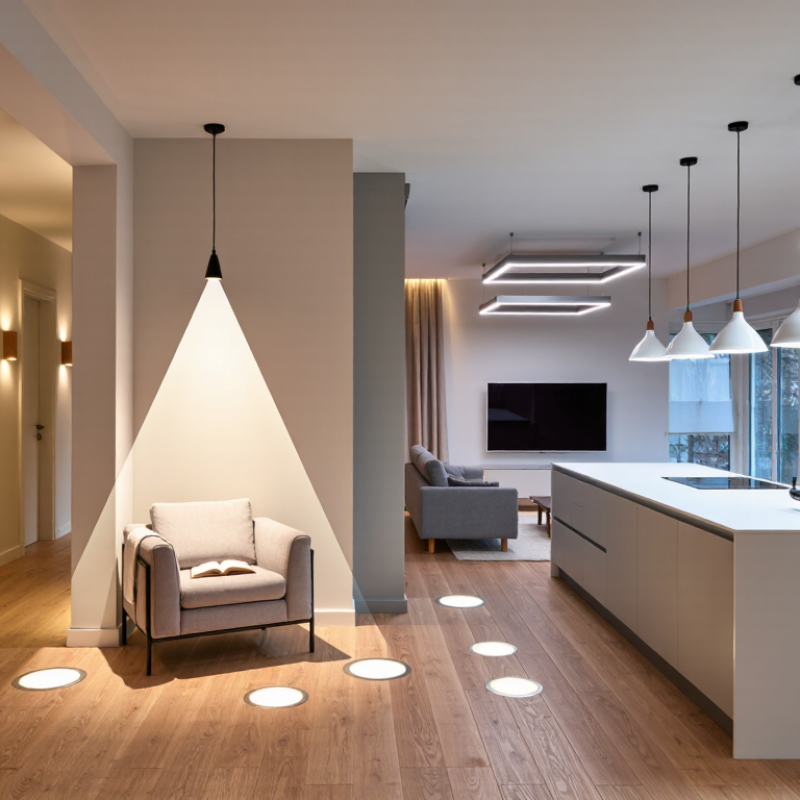
What Brightness Level Is Best for Indoor Lighting in 2026?

Understanding Brightness Levels and Indoor Lighting Measurements

What Brightness Level Is Best for Indoor Lighting in 2026?

Understanding brightness starts with measuring light correctly. Lumens describe the light produced by a fixture, while lux measures light reaching a surface. One lux equals one lumen per square meter. For general living areas, 100 to 200 lux often feels comfortable. Reading, cooking, and detailed work may need 300 to 500 lux. Bedrooms usually benefit from softer levels near 50 to 100 lux.

Measure at the place where your eyes or hands work. A kitchen counter needs a different reading than the nearby floor. Use a handheld light meter when accuracy matters. Phone apps can help with rough checks, but their sensors vary widely. Hold the meter flat, remove direct glare, and test several locations. One measurement can mislead.

Color temperature also changes perceived brightness. Warm light near 2700K can feel calmer, even at the same lux level. Cooler light may appear sharper and more energetic. Older adults often need stronger, more evenly distributed lighting because vision changes with age. I have found that reducing shadows can matter more than adding raw brightness. Too much light creates glare, eye fatigue, and reflections on screens. A tidy number can still mislead. Recheck the room after sunset, when outside daylight no longer influences your judgment.

Matching Brightness to Different Indoor Activities and Rooms

What Brightness Level Is Best for Indoor Lighting in 2026?

The best indoor brightness in 2026 is not one fixed number. It should match the room, activity, age, and visual comfort of each person. In my lighting assessments, I often begin with about 100–200 lux for relaxed living areas. Reading, sewing, and detailed hobbies usually need 300–500 lux. A kitchen counter may need similar brightness, especially near the cutting area.

Bedrooms generally feel more comfortable with softer light, around 100–200 lux. Bathrooms often work better near 200–300 lux, while a home office may require 400–500 lux across the desk.

These figures are useful starting points, not strict rules. Glare, wall colors, window light, and fixture placement can change how bright a room feels. I once recommended one strong ceiling fixture for a study. That advice was too simple; the desk still had shadows.

Tips: Use layered lighting instead of relying on one source. Add a focused lamp for reading or desk work. Keep screens away from direct reflections. Dimmers help rooms adapt from daytime tasks to evening rest. Check brightness at eye level, not only beneath the fixture. Older adults may need more light, but excessive brightness can still cause discomfort. A slightly uneven setup may also be acceptable if it feels natural during real use.

Choosing Color Temperature for Comfort, Focus, and Visibility

Indoor lighting feels comfortable when brightness and color temperature work together. Brightness controls how much light reaches a surface. Color temperature changes its visual warmth.

A 2700K to 3000K lamp creates a soft, amber atmosphere for living rooms and evening reading. It can feel calming, but low contrast may tire older eyes. I have noticed this during late reading sessions. The page looked pleasant, yet small print became harder to follow.

Short sentence.

For focused work, 3500K to 4000K often provides a balanced white tone. It supports clear edges without making a room feel clinical. Position the light beside or behind the work area, not directly in your eyes.

Keep the desk evenly lit, around 300 to 500 lux for ordinary office tasks. This range is a practical guide, not a personal rule. Some people prefer warmer light, especially after years of screen work. Others need stronger illumination because of age or reduced vision.

I sometimes overestimate brightness and create glare on glossy paper. That is a mistake worth checking.

For kitchens, workshops, and detailed tasks, 4000K to 5000K can improve perceived visibility. High color rendering also matters when judging food, clothing, or paint.

Test one setting at different times. Morning light can make cool lamps seem harsh, while evening shadows may make them useful. Dimmers help, but dimming does not always change color temperature.

Avoid placing bright fixtures in your direct line of sight. A comfortable room should reveal detail without demanding attention.

Adjusting Indoor Lighting for Age, Vision, and Time of Day

What Brightness Level Is Best for Indoor Lighting in 2026?

Adjusting indoor lighting begins with the person, not the fixture. Older eyes often need more illumination for reading, cooking, and moving safely. However, excessive brightness can create glare, especially on glossy tables or pale floors. A balanced room may use stronger task lighting with softer background light.

For reading, place the light beside or slightly behind your shoulder. Keep the page evenly lit, without a bright patch in your direct view. Someone with reduced vision may need a brighter lamp and larger text. They may also need stronger contrast between the page and the desk. A simple light meter can reveal dark corners that feel acceptable during daytime.

Time of day changes comfort. Brighter, cooler light can support alertness during morning work. Near bedtime, lower intensity and warmer light may feel gentler. Keep screens dimmer than the surrounding room, not brighter. That reduces the sharp visual jump between the display and nearby walls. Small changes matter.

There is no perfect setting. My own preference can shift after a long day. Test one adjustment at a time, then notice headaches, squinting, or shadows. Persistent eye strain deserves advice from an eye-care professional, because lighting cannot correct every vision problem. A safer room also needs clear pathways and controlled reflections.

What Brightness Level Is Best for Indoor Lighting in 2026?

Practical indoor illuminance targets by age, vision needs, and time of day

Illuminance is measured in lux (lx). General indoor activities commonly use about 100–200 lx, while reading and other visually demanding tasks often benefit from 300–500 lx. Older adults and people with reduced vision may need higher task lighting, but glare and harsh reflections should be avoided. In the evening, lower light levels of about 100–200 lx can support a more comfortable transition toward sleep; use dim, warm, indirect light at night.

Using Smart Controls to Optimize Lighting in 2026

What Brightness Level Is Best for Indoor Lighting in 2026?

Smart controls make indoor brightness more responsive, not simply brighter. A useful starting point is 100–200 lux for relaxed living areas. Reading corners may need 300–500 lux. Work surfaces often feel clearer near 500 lux, depending on age and eyesight.

Use occupancy sensors to lower lights when rooms are empty. Add daylight sensors near windows. They can reduce artificial brightness during sunny afternoons. Schedule warmer, softer light in the evening. This may support a calmer routine and reduce glare before sleep. Keep screens and ceiling lights from competing.

Test settings at different times.

In my experience, automatic dimming works best when changes feel gradual. Sudden adjustments can feel distracting, especially during meetings or meals. Set minimum brightness carefully, because dark corners may increase eye strain. A wall control should remain available when automation gets it wrong. No preset is perfect.

Measure the room with a basic light meter if possible. Then compare readings with comfort, shadows, and reflections. Glossy tables may need lower brightness than expected. Older adults may prefer stronger, even illumination. However, personal comfort matters more than a single number. Review the settings every few weeks. Seasonal daylight changes can expose weaknesses in an otherwise thoughtful setup.

FAQS

What is the difference between lumens and lux?

Lumens measure light produced by a fixture. Lux measures light reaching a surface. One lux equals one lumen per square meter.

What brightness suits a living room?

Try 100–200 lux for relaxed living areas. Check the sofa, floor, and reading corner separately. Comfort matters more than one perfect number.

How bright should a bedroom be?

Bedrooms often feel comfortable around 50–100 lux. Some people prefer 100–200 lux for general activities. Softer light can support evening relaxation.

How much light does reading or detailed work need?

Reading, sewing, and detailed hobbies usually need 300–500 lux. Place focused light near the book or work surface. Shadows still matter.

What brightness is suitable for a kitchen counter?

A kitchen counter may need about 300–500 lux near cutting areas. Measure the counter, not the nearby floor. Hands need clear, even light.

How bright should a home office or bathroom be?

A home office may need 400–500 lux across the desk. Bathrooms often work well around 200–300 lux. Check for reflections in mirrors and screens.

How can indoor brightness be measured accurately?

Use a handheld light meter when accuracy matters. Hold it flat at the working surface. Test several locations and remove direct glare.

Are phone light-meter apps reliable?

Phone apps can provide rough checks, but their sensors vary widely. Use them for comparison, not certainty. One reading misleads.

Does color temperature change perceived brightness?

Yes. Warm light near 2700K can feel calmer at the same lux level. Cooler light may appear sharper and more energetic.

How can glare and shadows be reduced?

Use layered lighting instead of one strong ceiling fixture. Add focused lamps for desks or reading. Dimmers help adjust light from daytime tasks to evening rest. I once recommended one strong fixture, and the desk still had shadows.

Conclusion

Choosing the right indoor lighting level in 2026 starts with understanding brightness measurements such as lumens and how they differ from perceived light. The question “what brightness level is needed for indoor lighting” depends on the room, task, surface colors, and personal comfort. Soft, moderate light may suit bedrooms and living areas, while brighter, more even illumination is useful for kitchens, bathrooms, study spaces, and detailed work. Reading, cooking, working, and relaxing each require a different balance of visibility and comfort.

Color temperature also affects how a room feels: warmer light can support relaxation, while cooler or neutral light may improve alertness and focus. Older adults or people with changing vision may benefit from increased brightness, reduced glare, and stronger contrast. Lighting should also adapt throughout the day, using softer settings in the evening and brighter levels during active hours. Smart controls can simplify this process by adjusting brightness, color temperature, schedules, and occupancy settings to create comfortable, efficient, and personalized indoor environments.

Aria

Aria

Aria is a dedicated marketing professional with a deep passion for innovative strategies and a keen understanding of our company's product offerings. With a wealth of experience in the industry, Aria excels at crafting engaging content that highlights the unique features and benefits of our......