What Is the Best Lighting for Garages and Canopies?

Time:2026-10-11 Author:Liam
0%

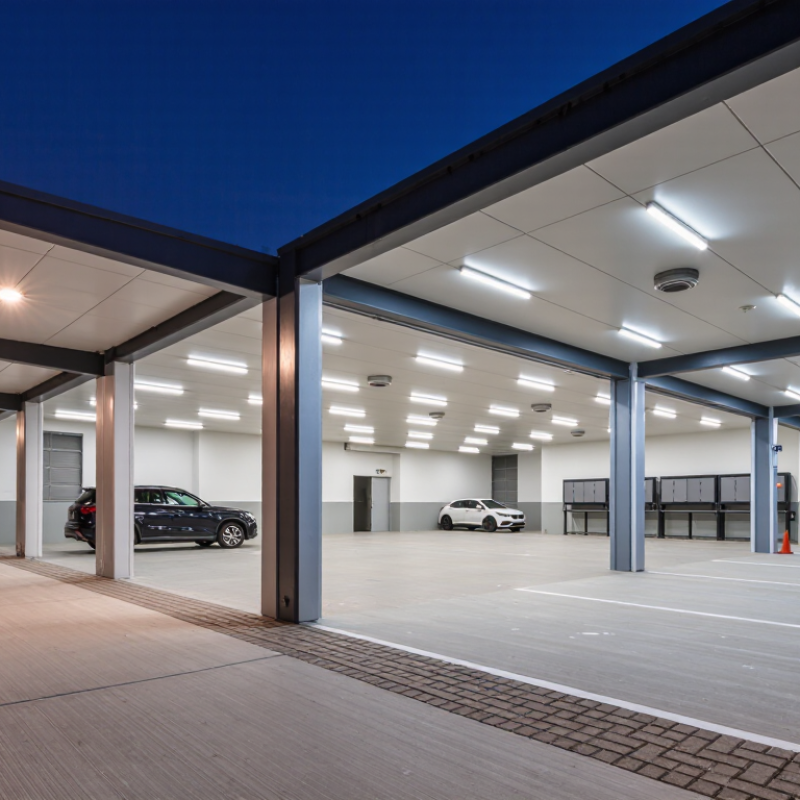
Choosing what is the best lighting for garages and canopies requires more than selecting the brightest fixture. A powerful lamp may create harsh glare, deep shadows, and unsafe contrast near entrances. Good design starts with purpose. Garages need clear visibility around vehicles, walls, stairs, and storage areas. Canopies need even illumination across drive lanes, payment points, and pedestrian paths.

Lighting designer and author Randall Whitehead offers a useful principle: “Good lighting is not about how much light you have, but how you use it.” His observation fits these spaces well. A well-planned LED system should provide balanced brightness, a comfortable color temperature, and strong color rendering. In many garages, 4000K light can appear clean without feeling excessively cold. A canopy may need carefully shielded fixtures to reduce glare for drivers and pedestrians.

Details matter. Look for fixtures with suitable ingress protection, reliable thermal performance, and controlled beam distribution. Motion sensors can reduce energy waste in quiet areas, but poor settings may leave users walking through sudden darkness. That problem is easy to overlook.

There is no perfect fixture for every site. Ceiling height, concrete surfaces, weather, security needs, and maintenance access all change the answer. A bright ceiling can still leave a dark stairwell. A low-cost product can become expensive when it fails repeatedly. This guide examines practical lighting choices, common design mistakes, and the measurements professionals use to create safer, more dependable garages and canopies.

What Is the Best Lighting for Garages and Canopies?

Garage and Canopy Lighting Requirements

Garage and Canopy Lighting Requirements begin with visibility, uniformity, and safe movement. IES parking-facility guidance commonly recommends about 5 footcandles for general parking areas, with higher levels near ramps, entrances, and payment points. Local codes may differ. Verify them before installation.

Measure more than brightness. A dark patch beside a bright fixture can hide pedestrians, wheel stops, or fluid spills. Many specifications target uniformity ratios near 3:1, while sheltered pedestrian zones often need stronger vertical illumination. The U.S. Department of Energy reports that LED systems can use at least 75% less energy than incandescent lighting and last up to 25 times longer. That advantage disappears when poor optics create glare and encourage over-lighting. Shielded distributions, moderate brightness, and suitable mounting heights matter.

Canopies also need weather resistance, impact protection, and reliable controls. Select equipment according to the site’s dust and water exposure, using an appropriate IP rating under IEC 60529. Occupancy sensors and daylight controls can reduce operating hours; DOE field studies have documented substantial savings from lighting controls in commercial buildings. Still, sensors may miss slow-moving vehicles. Test them at night. A design that passes a calculation can feel unsafe in rain, shadows, or glare. That is the part many plans underestimate. Record illuminance at pavement level and eye height, then adjust before handover.

What Is the Best Lighting for Garages and Canopies? - Garage and Canopy Lighting Requirements

Area or Application Recommended Maintained Illuminance Typical Correlated Color Temperature Color Rendering Recommended Protection Glare and Uniformity Considerations Useful Controls Key Design Notes
Covered Parking Bays 75–100 lux 3,500–4,000 K CRI 80 or higher IP54 minimum indoors; IP65 where exposed to dust or water Use broad, even distribution; avoid direct glare into drivers’ eyes and nearby homes. Occupancy sensors, daylight dimming, scheduled operation Place fixtures to minimize dark areas between parked vehicles and pedestrian routes.
Open Parking Areas 5–20 lux, depending on risk and activity 3,000–4,000 K CRI 70–80 or higher IP65 or higher for outdoor fixtures Maintain consistent illumination across vehicle lanes and avoid excessive brightness at the perimeter. Photocells, astronomical time clocks, adaptive dimming Local outdoor-lighting rules may limit glare, spill light, operating hours, and upward light.
Vehicle Entry and Exit Lanes 100–150 lux 4,000 K is commonly suitable CRI 80 or higher IP65 or higher outdoors Provide smooth transitions between daylight, exterior areas, and the darker garage interior. Daylight sensors, vehicle presence detection, ramp-level controls Lighting should not obscure traffic signs, lane markings, mirrors, or security cameras.
Ramps and Turning Areas 100–150 lux 3,500–4,000 K CRI 80 or higher IP54 indoors; IP65 outdoors or in wet zones Use uniform, low-glare fixtures; avoid strong contrast at changes in direction or elevation. Occupancy sensors and daylight-linked dimming Give special attention to ramp edges, wheel stops, columns, corners, and pedestrian crossings.
Pedestrian Walkways and Stair Access 100–150 lux 3,500–4,000 K CRI 80 or higher IP54 minimum; IP65 in damp or exposed locations Prioritize vertical illumination on faces, handrails, signs, and doorway approaches. Occupancy sensors with a low-level standby setting Prevent shadows on stair treads and ensure lighting continues through landings and transitions.
Loading and Unloading Zones 150–200 lux 4,000 K is commonly suitable CRI 80 or higher IP65 outdoors; use impact-resistant construction where equipment may strike fixtures Control glare near reversing vehicles and provide adequate vertical light for labels and vehicle doors. Occupancy sensors, task-area switching, time schedules Coordinate lighting with dock equipment, overhead doors, fire systems, and vehicle clearance requirements.
Maintenance and Repair Areas 300–500 lux 4,000–5,000 K CRI 80 or higher; CRI 90 preferred for detailed work IP54 minimum; select higher protection for wash-down areas Provide uniform task lighting with limited flicker and minimal shadows around work surfaces. Local task controls, occupancy sensors, daylight dimming Use supplementary task lighting where fine inspection, repair, or color identification is required.
Security and Payment Points 150–300 lux 4,000 K is commonly suitable CRI 80 or higher; CRI 90 preferred for identification IP54 indoors; IP65 for exposed equipment Balance facial visibility with camera performance; avoid bright sources directly behind people. Continuous low-level lighting, occupancy boost, security-system integration Coordinate fixture positions with cameras, intercoms, payment equipment, and access-control devices.
Outdoor Canopies and Covered Drop-Offs 100–200 lux 3,000–4,000 K CRI 80 or higher IP65 minimum; use IP66 where heavy rain or water jets are expected Use shielded or well-controlled optics to limit glare, sky glow, and light trespass. Photocells, astronomical time clocks, occupancy-based dimming Specify corrosion-resistant materials in coastal or chemically aggressive environments.
Emergency Egress Routes Follow the adopted local life-safety code; commonly at least 1 lux along the centerline of the egress path Any code-compliant source; 3,000–4,000 K is commonly used CRI 70 or higher is generally practical Use equipment suitable for the installation environment Keep exit signs, stairs, changes in level, and obstacles clearly visible during normal and emergency operation. Automatic emergency operation with tested backup power Emergency-lighting values, duration, testing, and placement must follow the applicable local code and authority requirements.

Note: Illuminance values are practical design ranges rather than a substitute for local building, electrical, fire, accessibility, workplace, or outdoor-lighting regulations. Final designs should be verified through a lighting calculation and site-specific code review.

Choosing the Right Lighting Types for Each Space

Choosing garage and canopy lighting starts with the space, not the fixture. Garages need clear vertical visibility, while canopies must reduce glare for drivers and pedestrians. For garages, linear LED luminaires provide broad, even coverage between beams. Select sealed, dust-resistant housings where exhaust, moisture, or cleaning water may be present. Occupancy sensors can reduce unnecessary runtime in quiet areas.

Canopies need a different approach. Use wide-distribution ceiling fixtures with controlled cutoff optics. This keeps light on the pavement instead of shining into nearby homes or drivers’ eyes. A neutral color temperature around 3500K to 4000K can reveal people, signs, and surface hazards without feeling excessively harsh.

The Illuminating Engineering Society’s RP-8 guidance emphasizes maintained illuminance and uniformity for outdoor pedestrian and vehicle areas. Bright spots are not enough.

Energy use deserves attention. The U.S. Department of Energy reports that LED lighting can use at least 75% less energy and last up to 25 times longer than incandescent lighting. The Commercial Buildings Energy Consumption Survey from the U.S. Energy Information Administration identifies lighting as roughly 17% of commercial building electricity use. That makes controls and distribution important, not optional.

I have seen overly bright garages still feel unsafe because shadows remain under vehicles. More light did not fix the layout. Review mounting height, spacing, glare, and nighttime performance after installation. Real conditions can challenge the plan.

Planning Light Levels, Coverage, and Fixture Placement

Planning garage and canopy lighting begins with the task, not the fixture. The IES Lighting Handbook commonly uses about 5 footcandles (54 lux) for general parking areas and higher levels near ramps, entrances, and pedestrian crossings. These figures are design references, not automatic answers. A busy repair garage may need 30–50 footcandles on work surfaces, while a storage bay may need less. Confirm local codes and the actual work performed.

Coverage matters more than impressive lumen totals. The U.S. Department of Energy’s Solid-State Lighting reports show that modern LED systems can exceed 100 lumens per watt, but efficiency cannot correct poor spacing. Mount fixtures in a regular grid, then check the floor between luminaires. Dark bands beside columns are a warning. For canopies, place fixtures over vehicle doors and walking paths, not only along the perimeter. Use a photometric layout to review average, minimum, and maximum illuminance before installation.

Glare needs attention.

The IES guideline RP-8-18 emphasizes visibility, uniformity, and controlled glare in exterior transportation areas. Shielded optics, moderate mounting heights, and a consistent beam pattern usually improve driver comfort. In enclosed garages, light-colored ceilings and walls can increase useful reflected light, though dirt quickly reduces that benefit. A clean calculation may still disappoint onsite. Test one bay at night, measure illuminance at floor level, and adjust spacing before repeating the entire installation. Cite: IES Lighting Handbook; IES RP-8-18; U.S. Department of Energy, Solid-State Lighting R&D reports.

Recommended Maintained Illuminance for Garages and Canopies

The chart shows typical planning targets in lux for common garage and canopy zones. Higher levels are used at ramps, entrances, and loading areas because drivers and pedestrians need more visual information during movement and transition.

Values are practical reference levels based on commonly used roadway, parking, and industrial-lighting guidance. Confirm the final design against local regulations, uniformity requirements, glare limits, ceiling height, and maintenance conditions.

Installation, Safety, and Weather Protection

What Is the Best Lighting for Garages and Canopies?

Installation, Safety, and Weather Protection

Good garage lighting starts with safe installation, not maximum brightness. For covered parking areas, choose fixtures rated for damp or wet locations. An IP65 enclosure resists dust and water jets, but it does not guarantee impact resistance or protection from long-term sunlight. Check the complete product specification. Install sealed junction boxes, suitable cable glands, and corrosion-resistant fasteners. A qualified electrician should verify grounding, circuit protection, and local electrical requirements.

Mount fixtures high enough to reduce tampering and glare, while keeping light on walking and driving paths. Even illumination matters more than a harsh central beam. The U.S. Department of Energy reports that LED lighting can use at least 75% less energy and last up to 25 times longer than incandescent lighting. That efficiency helps, but poor placement still creates dark corners. Bright is not always safer. A reflective concrete floor can produce uncomfortable glare.

Wet conditions deserve extra attention. Use ground-fault protection where required, keep connections above possible standing water, and inspect seals after storms. The U.S. Bureau of Labor Statistics recorded 865 fatal workplace injuries from falls, slips, and trips in 2022. Lighting cannot prevent every incident, yet it can reveal puddles, ramps, oil marks, and uneven surfaces. One overlooked issue is maintenance access. If replacing a lamp requires an unstable ladder, the original installation was not fully practical. Reliable lighting should remain safe to service.

Energy Efficiency, Controls, and Ongoing Maintenance

What Is the Best Lighting for Garages and Canopies?

In garages and canopies, efficient lighting must provide clear visibility without wasting energy. LED fixtures usually reduce electricity use and last longer than older lamps. However, brightness alone is not the answer. Poorly positioned fixtures can create glare, dark corners, and unsafe reflections on wet floors. I recommend checking uniformity at vehicle entrances, payment areas, stairs, and pedestrian routes. A neutral white color, often around 4000K, can support comfortable visibility without feeling overly harsh.

Controls can reduce operating costs when they match real activity. Occupancy sensors work well in storage zones and quiet parking areas. Time schedules may suit busy entrances with predictable traffic. Daylight dimming can help beneath transparent canopies, but sensors need careful commissioning. False triggers are common near moving vehicles. Keep it simple. Divide large spaces into practical lighting zones, then review their settings after several weeks. A qualified electrician should confirm installation quality, emergency functions, and applicable local requirements.

Maintenance protects both performance and safety. Dust on lenses can noticeably reduce illumination, especially in open-sided canopies. Inspect fixtures for flicker, moisture entry, loose fittings, and damaged seals. Clean lenses with suitable materials, not abrasive products. Small faults matter. I have seen energy reports look healthy while poorly aimed fixtures left walking routes too dark. Records reveal patterns. Track lamp failures, sensor complaints, cleaning dates, and monthly electricity use. This evidence supports better adjustments, although no control plan works perfectly from day one.

FAQS

How bright should a garage or canopy be?

General parking areas often target about 5 footcandles. Higher levels may suit ramps, entrances, and payment areas. Local requirements can differ. Verify them before installation.

Why is lighting uniformity important?

Bright fixtures cannot fix dark patches. Shadows may hide pedestrians, wheel stops, puddles, or oil marks. Many designs target a uniformity ratio near 3:1. A calculation may pass, yet the space can still feel unsafe.

Which fixtures work well in garages?

Linear LED fixtures can provide broad, even coverage between beams. Use sealed housings where dust, moisture, exhaust, or cleaning water is present. Keep fixtures aligned with walking and driving paths. More light is not always better.

How should canopy lighting differ from garage lighting?

Canopies need wide distribution and controlled cutoff optics. Light should reach the pavement without shining into drivers’ eyes. It should also limit glare toward nearby homes. Bright spots alone are not enough.

What color temperature is suitable?

A neutral range around 3500K to 4000K often supports comfortable visibility. It can reveal people, signs, and surface hazards. Very harsh light may increase discomfort. Test the result at night.

Can sensors and daylight controls reduce energy use?

Yes, controls can reduce unnecessary operating hours. Occupancy sensors work well in quiet garage areas. However, slow-moving vehicles may not trigger them reliably. Test sensors after dark, including near corners and ramps.

What weather protection should covered parking fixtures have?

Select fixtures for damp or wet locations. An IP65 enclosure resists dust and water jets. It does not automatically prove impact resistance or sunlight durability. Check seals, cable glands, fasteners, and junction boxes.

How should lighting performance be checked before handover?

Measure illuminance at pavement level and eye height. Check corners, under vehicles, ramps, and pedestrian routes. Inspect glare during rain or after cleaning. Adjust spacing or mounting when real conditions expose problems. Plans can be wrong. That happens.

Conclusion

Choosing what is the best lighting for garages and canopies depends on the space’s purpose, size, ceiling height, and exposure to weather. Garages typically need bright, even illumination for parking, storage, and detailed tasks, while canopies require dependable coverage for safe movement, vehicle access, and visibility around entrances. The right solution may combine overhead fixtures, focused task lighting, and wall-mounted units to reduce shadows and improve coverage.

Effective planning should balance light levels, fixture spacing, glare control, and mounting height. Fixtures must be suitable for dust, moisture, temperature changes, and accidental impact, with installation completed safely and according to applicable requirements. Energy-efficient light sources, occupancy sensors, timers, and daylight controls can reduce unnecessary consumption without compromising visibility. Regular cleaning, inspections, and timely replacement of damaged components help maintain consistent performance and extend the lighting system’s service life.

Liam

Liam

Liam is a dedicated marketing professional with a profound expertise in the industry, where he excels at highlighting the unique advantages of our core products. With a keen understanding of market trends and consumer needs, Liam frequently updates our company’s professional blog, providing......