When exploring lighting options, many wonder what is the difference between panel lights and downlights. Both types serve distinct functions in residential and commercial spaces. Understanding their characteristics helps in making informed decisions.
Panel lights are typically flat and surface-mounted. They provide an even distribution of light across a wide area, ideal for large spaces. Their minimalist design complements modern aesthetics. However, they may lack intensity in specific zones.
In contrast, downlights are recessed fixtures that direct light downward. They create focused beams and are great for highlighting artwork or areas. This focused approach can sometimes leave parts of a room underlit. Each type has pros and cons that should be weighed carefully, depending on your needs.
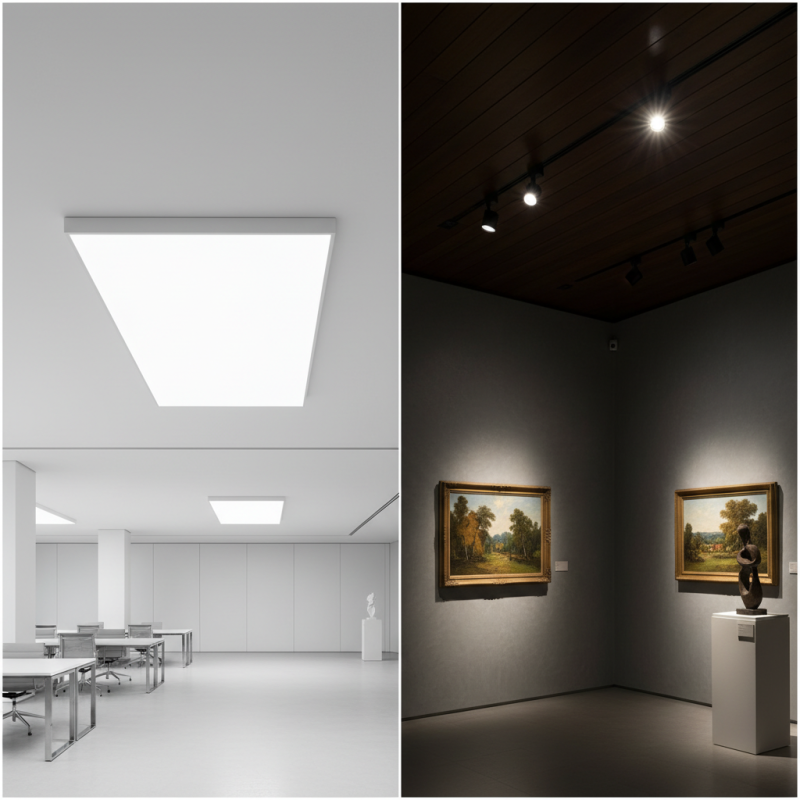
Panel lights are a popular choice in modern lighting design. They typically feature a flat, slim profile and provide a broad distribution of light. The primary purpose of panel lights is to create an even light across a space, making them ideal for commercial areas or large rooms. Their design allows for easy installation in ceilings, giving a clean and minimalist look.
These lights use LED technology, which ensures energy efficiency. Panel lights consume less power compared to traditional fixtures. The light emitted is usually soft and diffused, reducing glare. This quality makes them suitable for offices or healthcare facilities where comfort is key. However, one key aspect to consider is the quality of materials. Cheaper options may not provide the best longevity or performance.
While panel lights offer many advantages, some users may find their installation requires professional assistance. Incorrect installation can lead to uneven lighting. Awareness of these factors is essential for making informed decisions. Selecting the right lighting involves understanding your space's needs. Balance aesthetics and functionality to achieve the best results.
Downlights play a significant role in modern lighting design. They are recessed fixtures that sit flush with the ceiling, providing a sleek and unobtrusive appearance. These fixtures are designed to direct light downwards, which enhances visibility in specific areas. A study by the International Association of Lighting Designers noted that downlights can significantly improve spatial perception in interiors. The focused illumination highlights architectural features and artwork, creating an inviting atmosphere.
The versatility of downlights is noteworthy. They are suitable for various applications, from residential to commercial spaces. According to research by the American Lighting Association, 67% of designers prefer downlights in kitchen and living areas. This preference stems from their ability to create layered lighting effects. Users should consider the type of bulb, beam angle, and trim style when selecting downlights for a project. These factors can greatly influence light quality and ambiance.
However, downlights are not without challenges. Improper installation can lead to light leakage or uneven brightness. Energy efficiency is another concern. Many consumers are unaware of the significant energy savings available with LED downlights. According to the U.S. Department of Energy, switching to LED can reduce energy consumption by up to 75%. As lighting technology evolves, staying informed about options and best practices is essential for achieving desired lighting outcomes.
When considering panel lights and downlights, design and aesthetic appeal play a significant role. Panel lights offer a sleek, modern look. They are typically larger and provide broad illumination. Their flat design allows them to blend seamlessly into ceilings. This creates a clean, uninterrupted surface. In open spaces, they can enhance a contemporary feel. They are ideal for offices or commercial settings where uniform lighting is needed.
On the other hand, downlights offer a more focused approach. They are often recessed into the ceiling. This creates a sense of depth and dimension in a room. The light directs downward, which can highlight specific areas, like artwork or seating. Downlights can introduce a more intimate atmosphere. Homeowners often choose them for living rooms or dining areas.
While both options have unique aesthetic qualities, the choice depends on personal preference and intended use. Panel lights can feel stark in more cozy spaces. Downlights may require careful placement to avoid shadows. Designers often recommend mixing both types for dynamic lighting schemes. Balancing functionality and aesthetics ensures a harmonious environment.
Panel lights and downlights offer different lighting performances suitable for various settings. Panel lights are larger and provide broader illumination. They distribute light evenly across spaces. According to recent reports, panel lights have a luminous efficacy of up to 100 lumens per watt. This efficiency makes them ideal for large areas, such as offices and retail spaces.
On the other hand, downlights focus light in a directional manner. They create accent lighting and are commonly used in residential settings, like kitchens and hallways. Research shows that downlights can achieve around 80 lumens per watt. While this is less efficient than panel lights, the concentrated light can enhance aesthetic appeal and create ambiance.
Choosing between these two types of lighting involves understanding specific needs. Were you aware that incorrect placement of downlights may produce uneven light distribution? This challenge can lead to shadows and a less welcoming environment. Panel lights, despite their wide coverage, can sometimes result in glare if not positioned wisely. Recognizing these nuances helps in making informed decisions for effective lighting outcomes.
Panel lights and downlights serve different purposes in lighting design, each with unique applications.
Panel lights are often used in commercial spaces. They provide a uniform light spread, ideal for offices and retail environments. Their slim profile allows for easy installation in ceilings.
In contrast, downlights focus light downward, making them perfect for accentuating features in homes and galleries.
Common usage scenarios for panel lights include conference rooms and classrooms, where consistent illumination is essential. These lights reduce shadows and evenly light large areas.
Downlights, on the other hand, are popular in kitchens and living rooms. They create ambiance and highlight specific areas, enhancing the overall aesthetic.
When choosing between the two, consider the space’s function and desired atmosphere.
While panel lights may lack the dynamic lighting of downlights, they excel in efficiency and low maintenance. Downlights can add visual interest but may require careful placement to avoid over-lighting.
Reflecting on these differences can guide better lighting decisions, ensuring both practicality and style in any setting.
: Panel lights have a sleek, flat design that blends into ceilings, while downlights are recessed, creating depth and focus.
Panel lights excel in commercial spaces, like offices and retail environments, providing uniform and broad illumination.
Downlights direct light downward, highlighting specific areas and creating a more intimate feel in spaces like living rooms.
Panel lights can achieve up to 100 lumens per watt, making them efficient for larger areas.
Panel lights may cause glare if not positioned wisely, affecting the comfort of the lighting environment.
Downlights can enhance ambiance, but they require careful placement to avoid shadows and uneven light distribution.
Downlights are often used in kitchens and galleries to accentuate features and create visual interest.
Panel lights are used for consistent illumination, while downlights add focus and warmth in cozy settings.
Yes, mixing both can create dynamic lighting schemes that balance aesthetics and functionality.
Consider the space's function and desired atmosphere, as each type has strengths and weaknesses.
When exploring "what is the difference between panel lights and downlights," it’s essential to understand their definitions and purposes. Panel lights are flat, square or rectangular fixtures designed to provide even and diffuse light, often used in commercial spaces or offices for ambient illumination. In contrast, downlights are recessed fixtures aimed at directing focused light downward, creating a more dramatic effect often utilized in residential settings or to highlight specific areas.
Key differences lie in their design and aesthetic appeal; panel lights have a sleek, modern look suitable for open ceilings, while downlights offer a discreet and minimalist appearance. Additionally, their lighting performance varies, with panel lights providing broader illumination and downlights focusing light for tasks or accenting spaces. Common applications also diverge, where panel lights are typically found in larger areas, whereas downlights are favored in situations requiring targeted lighting, such as in kitchens or galleries.

Velvet Light