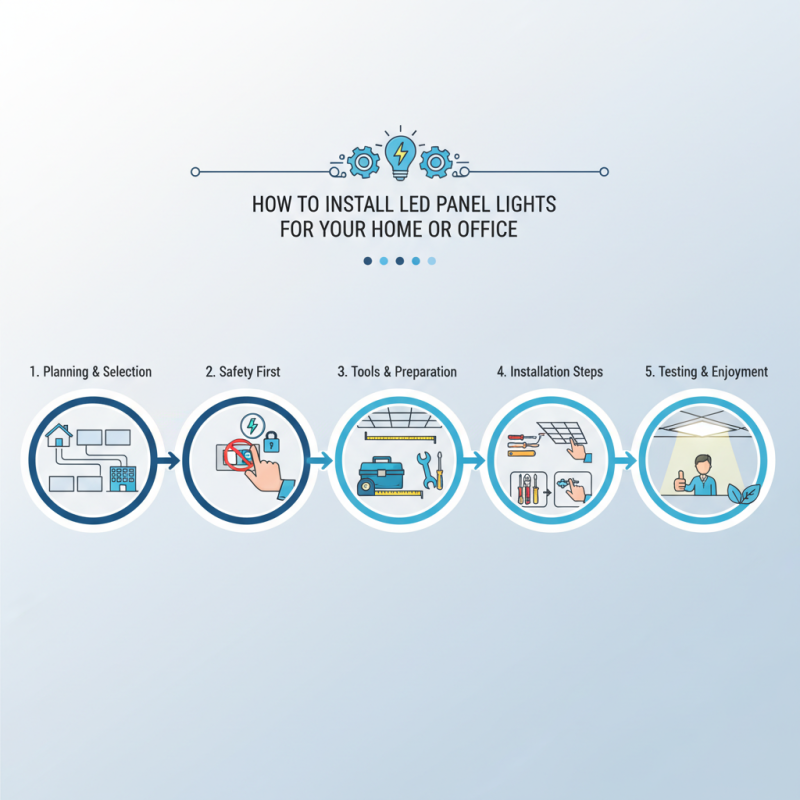
In today’s energy-conscious world, how to install LED panel lights has become a vital skill for homeowners and office managers. These lights not only enhance the aesthetics of a space but also provide significant energy savings. Understanding the installation process can seem daunting, but with the right tools and knowledge, anyone can do it.
LED panel lights come in various styles and sizes, so choose what fits your environment best. Take time to plan where the lights will go for maximum effect. It's easy to overlook details, like ensuring your electrical system can support the new lights. Ignoring these aspects can lead to issues later.
When you start, ensure safety first by turning off power. Double-check instructions to avoid mistakes during installation. Even those with experience might find certain steps tricky. It's essential to approach the task with a willingness to learn and adapt. As you delve into how to install LED panel lights, be prepared to tackle challenges and invite opportunities for improvement.
LED panel lights have gained popularity in residential and commercial settings due to their efficiency and modern aesthetic. These lights are flat, thin panels that provide uniform illumination across a space. According to a report from the U.S. Department of Energy, LED lighting can reduce energy consumption by up to 75% compared to traditional incandescent bulbs. This significant reduction can lead to substantial savings on electricity bills over time.
The benefits of LED panel lights extend beyond energy savings. They have a longer lifespan, often lasting up to 50,000 hours. This longevity reduces the frequency of replacements, ultimately decreasing waste and maintenance costs. Additionally, LED lights emit less heat, which helps maintain a comfortable environment. A study from the Lighting Research Center indicates that effective lighting can improve productivity in workplaces by as much as 20%.
However, it’s essential to consider the initial investment required for LED panel lights. While they are usually pricier upfront, the long-term benefits often outweigh these costs. Users should also evaluate the suitable color temperatures and brightness levels to ensure optimal comfort and functionality. Careful selection is crucial, as the wrong choice may impact mood and productivity.
When choosing LED panel lights for your home or office, size and type are crucial. Measure the area where you intend to install the lights. The size should complement the room's dimensions without overwhelming the space. For example, larger rooms benefit from bigger panels, while smaller spaces should use more compact designs.
Choosing the type of LED panel light is equally important. There are various types: edge-lit, backlit, and troffer panels. Edge-lit panels are sleek and modern. Backlit options provide even lighting but can be bulkier. Troffer panels are typically used in commercial spaces but can also enhance home designs. Analyze your needs and preferences before deciding.
Tips: Take time to compare lighting temperatures. Warmer tones can create a cozy atmosphere, while cooler tones might suit a workspace. Test different brightness levels to find the right fit. Sometimes, your choices may lead to unexpected outcomes. Adjustments might be necessary to optimize lighting conditions. Remember, the right mix of size, type, and brightness can transform your environment significantly.
When installing LED panel lights, having the right tools and materials is critical for success. You will need a few essentials. Start with a drill and a screwdriver. These will help you securely mount the panel lights. A level is important to ensure your lights are straight. Comfortable safety goggles protect your eyes during installation.
Gather your materials: LED panel lights, mounting brackets, and screws. Don't forget to have wire connectors on hand. They will ensure safe and reliable electrical connections. Use quality wires to prevent any risks.
Tips: Always turn off the power before starting. It’s a simple step that ensures your safety. Measure your ceiling space. You want the lights in the right position. If you're not confident in your wiring skills, consider consulting a professional. Reflect on your installation experience; it's okay to make mistakes. Each project is a chance to learn and improve.
| Tool/Material | Purpose | Quantity Needed | Estimated Cost ($) |
|---|---|---|---|
| LED Panel Light | Main lighting source | 1 per installation | 50 - 200 |
| Mounting Brackets | Secure panel to ceiling | 1 set | 10 - 30 |
| Wire Connectors | Connect electrical wires | 10 | 5 - 15 |
| Screwdriver | Installation tool | 1 | 10 - 20 |
| Drill | For creating holes | 1 | 50 - 150 |
| Electrical Tape | Insulate electric connections | 1 roll | 5 - 10 |
| Power Meter | Check electrical efficiency | 1 | 30 - 100 |
Installing LED panel lights can significantly enhance the ambiance of your home or office while improving energy efficiency. According to the U.S. Department of Energy, switching to LED lighting can reduce energy consumption by up to 75%. This makes it a popular choice for modern interiors.
To begin, gather essential tools: a screwdriver, wire connectors, and a voltage tester. Ensure you switch off the power at the circuit breaker. Remove the existing light fixture carefully. This step often poses challenges, particularly with older wiring systems. Take time to inspect connections for any damages or signs of wear.
Next, position your LED panel light. Use mounting brackets to secure it, ensuring it’s level. In a recent industry study, improper installation was noted as a common issue leading to decreased lifespan of lighting products. Connect the wiring according to the manufacturer's instructions. Double-check your connections; mistakes could lead to flickering or failure to illuminate. After connections are made, restore power to test the lights. Reflect on your installation process. Did you encounter any unexpected hurdles? Identifying these areas helps improve future installations.
When installing LED panel lights, safety should always come first. Start by turning off the power supply before you begin. This simple step prevents electrical shocks. Use insulated tools during installation. Ensure that your workspace is dry and free of clutter. These precautions help create a safe environment for your project.
Regular maintenance is also essential for the longevity of your LED panel lights. Dust and debris can accumulate over time, dimming the brightness. Wipe down the panels periodically with a soft, dry cloth. Avoid using harsh chemicals that may damage the surface.
Tips: Check connections frequently. Loose wires can lead to flickering lights. Ensure that your panels are securely mounted. This helps avoid any unexpected falls or damage. Plan for periodic checks on the light's functionality, even if everything seems fine. Address minor issues before they escalate into bigger problems.
: LED panel lights are flat, thin panels that provide uniform illumination. They are popular for their efficiency.
LED lights can reduce energy consumption by up to 75%. This saves money on electricity bills over time.
LED panel lights often last up to 50,000 hours, reducing the need for frequent replacements.
Choosing the right color temperature affects mood and productivity. Poor choices may harm the work environment.
Essential tools include a drill, screwdriver, and a level. Safety goggles protect your eyes during installation.
Always turn off the power supply before beginning. Use insulated tools and keep the workspace dry.
Wipe down the panels with a soft cloth. Regularly check connections and ensure secure mounting to prevent issues.
If you’re unsure about wiring, consider consulting a professional. Reflecting on your skills can lead to improvement.
Yes, mistakes are part of learning. Each project provides an opportunity to gain experience and improve.
Avoid harsh chemicals that could damage the surface. Regular cleaning helps maintain brightness and functionality.
LED panel lights are an efficient lighting solution for both homes and offices, offering numerous benefits such as energy savings and a sleek design. When considering how to install LED panel lights, it's essential to first understand their advantages and determine the appropriate size and type for your space. Essential tools and materials for the installation process include screwdrivers, wire cutters, and mounting brackets.
The installation can be accomplished by following a step-by-step guide, ensuring that you adhere to safety tips throughout the process. Proper maintenance is equally important for maximizing the lifespan and efficiency of your LED panel lights. By understanding these key elements, you can successfully enhance your environment with beautiful and functional lighting.

Velvet Light