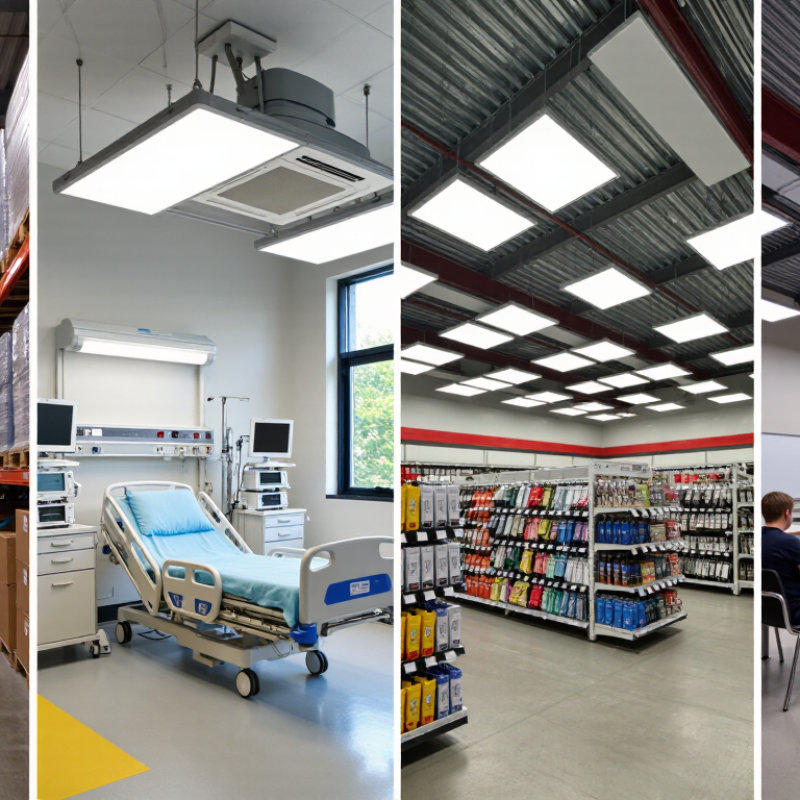
What industries benefit from LED indoor lighting? The answer extends well beyond offices. Warehouses need bright, even light across tall racks. Hospitals need dependable illumination in patient rooms and treatment areas. Retailers use accurate color rendering to show products clearly, while schools and factories need lighting suited to focused work. The right solution depends on the room, operating hours, and task—not just the fixture price.
The energy case is substantial. The International Energy Agency’s Buildings report says building operations account for about 30% of global final energy use. The U.S. Department of Energy reports that LEDs use up to 90% less energy than incandescent lighting. These figures offer useful context, but they do not guarantee savings for every site. Controls, installation quality, maintenance, and local electricity costs all matter. Details matter.
Lighting researcher Dr. Mariana Figueiro has described light as “the most powerful synchronizer of the circadian system.” That observation is especially relevant in workplaces and care settings, where light affects more than visibility. China’s indoor LED manufacturers serve these varied sectors with panels, high-bay fixtures, downlights, and task lighting. Buyers should compare verified performance data, glare control, color quality, and service support—not just wattage. LEDs are not magic. A poorly matched fixture can still create dark aisles or harsh reflections. This guide examines which industries gain the most, and where careful planning remains essential.
High-quality indoor LED lighting made in China is defined by verified performance, not a low quoted price. The International Energy Agency’s 2023 Buildings report estimates that buildings use about 30% of global final energy. Efficient lighting therefore matters, but a high lumens-per-watt figure alone can mislead. Check the complete luminaire’s measured efficacy, not just the LED chip’s rating.
Ask for an independent photometric report using IES LM-79 methods. Review light output, power, color temperature, and color rendering together. In offices, consistent color and controlled glare help reduce visual discomfort. In a warehouse, uniform illumination across aisles matters more than a bright spot beneath each fixture. Small differences between samples deserve attention.
Reliability also needs evidence. LM-80 data and TM-21 projections can help assess LED package lumen maintenance, but they do not guarantee the entire fixture’s service life. Check driver specifications, thermal design, and flicker results, including PstLM or SVM where available. A warm fixture housing may signal poor heat management. Ask for test conditions and production-sample records; paperwork can look convincing while real-world performance still varies. A careful buyer compares measured results with the intended room, mounting height, and operating hours.
Indoor LED lighting is available in several forms, each suited to a different room and mounting style. Recessed downlights create focused ceiling illumination in corridors, kitchens, and small offices. Flat panels spread light evenly across offices, classrooms, and clinics. They can reduce dark patches on desks. Details matter.
Linear LED tubes fit compatible fixtures in workshops, storage areas, and service spaces. High-bay luminaires hang over tall warehouses or gymnasiums, where beams must reach the floor. For reading desks and counters, task lights direct illumination to a specific surface. LED strips add flexible accent or under-cabinet lighting, though poor placement can create distracting glare.
Performance depends on more than the fixture type. The U.S. Department of Energy reports that LEDs use at least 75% less energy and can last up to 25 times longer than incandescent lighting. These figures are useful benchmarks, not guarantees for every installation. Check lumen output, color temperature, dimming compatibility, and glare control against the actual room. A cool, bright panel may suit detailed work but feel harsh in a lounge. Not always. I have seen lighting plans overlook reflective floors; a small sample installation can reveal problems before a whole space is fitted.
Typical luminous efficacy ranges for common indoor LED fixture types (lumens per watt).
LED panels and linear lights are commonly used in offices, schools, healthcare facilities, and retail spaces. LED tubes and battens suit corridors, back-of-house areas, and general commercial interiors, while high-bay lights are designed for tall warehouses and industrial buildings. Values are typical product-level ranges; actual efficacy varies by product, output, optics, and operating conditions.
Chinese indoor LED lighting serves offices, factories, warehouses, shops, hospitals, schools, and hotels. In offices, uniform panels reduce glare over desks and meeting tables. Factories often need high-bay fixtures above production lines, while warehouses benefit from bright aisles and motion-responsive controls. Retailers use adjustable spotlights to highlight shelves; hospitals and classrooms need even, comfortable light. The International Energy Agency’s Tracking Buildings 2023 report estimates that buildings consume about 30% of global final energy. Efficient lighting can help reduce that demand, though results depend on operating hours and controls. Small details matter.
Chinese suppliers offer a wide range of fixture types and specifications, but the right choice depends on the site, not the country of origin. Check color rendering for product displays, glare control for computer work, and ingress protection for dusty or damp areas. The U.S. Department of Energy’s Energy Saver guidance says LEDs use at least 75% less energy than incandescent lighting. That comparison is useful, but it does not guarantee savings against every existing system. A lighting audit can reveal where upgrades make sense. It can also expose awkward layouts.
Tips: Ask for photometric files, warranty terms, and test reports before ordering. Compare light levels at work surfaces, not just lumen output. Pilot a few fixtures first. Real rooms can surprise you.
Indoor lighting needs change with the work, not just the room size. The International Energy Agency estimates that lighting uses about 15% of global electricity. Getting the design right matters. In an office, desk work needs even light and controlled screen glare; EN 12464-1:2021 recommends 500 lux for writing, reading, and data processing. Warehouse storage areas are listed at 100 lux, where clear aisles and visible labels matter more than bright, uniform light across every shelf.
Healthcare spaces need lighting that supports close visual tasks while avoiding harsh glare on patients. Retail spaces often need accurate colour rendering, so fabrics and food look natural under the lights. In workshops, the right light depends on the task: fine inspection calls for more detail and fewer shadows than general circulation. Not a fixed recipe. A lux reading alone can mislead; a well-lit work surface may still feel uncomfortable if nearby areas are much darker.
LED systems can help meet these different needs through dimming, task lighting, and separate controls for zones. But controls add complexity, and poorly placed sensors can leave corners dim or lights switching off during quiet work. It is worth checking the space at actual working hours, with equipment and shelves in place. EN 12464-1 provides useful benchmarks, but each site still needs a design suited to its tasks.
Choosing an LED supplier starts with the room, not the catalogue. A warehouse needs even light across tall racks; a clinic needs accurate colour and controlled glare. Ask for measured lumen output, efficacy, colour rendering, flicker data, and compatibility with dimmers or sensors. Request test reports, not just product-sheet claims. A neat table is useful, but it cannot show how a fixture performs above a real workbench.
The International Energy Agency estimates that lighting uses about 15% of global electricity. The U.S. Department of Energy says LEDs can use up to 90% less energy and last up to 25 times longer than incandescent bulbs. Those figures are broad comparisons, not guarantees for every fixture. Compare products at the same light output, then check thermal management, driver quality, and lifetime evidence. For long-life claims, ask how lumen maintenance was tested, including whether LM-80 data and TM-21 projections are available. Small details matter.
Also check whether the supplier can provide consistent batches, clear warranty terms, replacement parts, and practical technical support. For a production floor, ask for a sample and measure light levels at the actual mounting height. For offices, inspect a dimmed fixture for visible flicker. I would not choose on price alone; yet a longer warranty does not prove better performance. Ask what is excluded, and get the answer in writing. A datasheet is not the whole story.
Offices, factories, warehouses, shops, hospitals, schools, and hotels use indoor LED fixtures. Each space has different needs.
Even light helps with desk work, while glare control makes screens easier to view. A common benchmark is 500 lux for reading and writing. Check the room during working hours.
Bright, clear aisles help workers see labels and stored items. Storage areas may use a 100-lux benchmark, but tall racks can create shadows. Measure at floor level and between shelves.
Adjustable spotlights can draw attention to shelves and displays. Good colour rendering helps fabrics and food look natural. A sample may look different in the actual shop.
These spaces need comfortable, even light for close tasks. Avoid harsh glare, especially around patient beds and study desks. Comfort matters.
Ask for measured light output, efficacy, colour-rendering data, flicker results, and dimmer compatibility. Request test reports, warranty terms, and replacement-part details. A product sheet is not enough.
Test a few fixtures at the intended mounting height. Measure light on work surfaces, not just total output. Real rooms can surprise you.
No. Savings depend on the existing lights, operating hours, and controls. Compare fixtures at similar light levels, and check how lifetime claims were tested. I would not choose on price alone.
High-quality indoor LED lighting made in China combines reliable components, consistent brightness, good color rendering, energy efficiency, and effective heat management. Available options include panels, downlights, linear fixtures, high-bay lights, and task lighting, allowing spaces of different sizes and purposes to be illuminated appropriately. The range of designs makes it practical to consider what industries benefit from led indoor lighting, from offices and schools to warehouses, retail spaces, healthcare facilities, and manufacturing plants.
Lighting requirements vary by activity: workplaces may need comfortable, even illumination, while warehouses and production areas often require brighter coverage and durable fixtures. Retail and hospitality settings may prioritize color quality and atmosphere, whereas healthcare and educational spaces benefit from controlled glare and dependable light. When selecting a supplier, buyers can compare product specifications, testing and quality-control practices, customization options, lead times, communication, and after-sales support to find a solution suited to their project.

Velvet Light