In recent years, many companies have made the move to LED lighting. This shift raises a significant question: why businesses switch to LED lighting? As energy efficiency becomes increasingly crucial, LEDs present compelling advantages. They consume less energy, resulting in lower utility bills. Moreover, their longevity reduces the frequency of replacements. This means less maintenance, which allows employees to focus on core tasks.
Additionally, LED lights are known for their superior quality and brightness. Many companies report that their work environments become more inviting and productive. However, transitioning to LED is not without challenges. The initial investment can be daunting for some businesses. It requires careful budgeting and planning. Nonetheless, the long-term benefits often outweigh the costs.
Sustainability is another vital factor influencing this trend. Many organizations are keen to enhance their green credentials. By switching to LED lighting, they significantly reduce their carbon footprints. This aligns with the values of modern consumers who favor eco-conscious brands. Thus, understanding why businesses switch to LED lighting reveals broader implications for the future of corporate responsibility and efficiency.
Benefits of Energy Efficiency: How LED Lighting Reduces Consumption
LED lighting is revolutionizing how businesses approach energy consumption. The shift to this technology significantly enhances energy efficiency. It uses up to 75% less energy than traditional lighting solutions. This dramatic reduction in energy usage directly translates to lower utility bills. Furthermore, LED lights have a longer lifespan, which reduces the frequency of replacements and associated labor costs.
Consider implementing these energy-saving tips. Assess your current lighting systems and identify the bulbs that require an upgrade. Evaluate different wattages to maximize efficiency. Opt for fixtures that complement LED lighting for optimal performance. Transitioning to energy-efficient options might feel overwhelming. It's essential to take a step-by-step approach while acknowledging each small victory.
Monitoring energy usage can reveal savings potential. Use a digital meter or smart lighting systems to track consumption. Adjusting usage habits, such as turning off lights in unused spaces, can yield immediate benefits. This might seem simple, yet many businesses overlook this basic principle. Embracing these changes can lead to significant reductions in energy costs over time.
Longer Lifespan: The Durability of LED Lights Compared to Traditional Bulbs
LED lights significantly outlast traditional incandescent bulbs. They can last up to 25,000 hours or more. In contrast, incandescent bulbs often burn out after just 1,000 hours. This durability translates into fewer replacements and less waste. Businesses can save on labor and disposal costs associated with frequent bulb changes.
LED lights also provide consistent performance over their lifespan. They don’t dim or flicker as they age, unlike traditional bulbs. This stability enhances workplace safety and ambiance. Moreover, LEDs are built to withstand vibrations and temperature fluctuations. They are ideal for both indoor and outdoor settings.
Switching to LED lighting can reduce maintenance efforts. However, not all businesses have made the switch. Some still rely on older technologies out of habit or initial cost concerns. It’s worth reflecting on these choices. The investment in LED technology often pays off through energy savings and reduced maintenance.
Cost Savings: Examining Financial Benefits Over Time with LED Lighting
LED lighting offers substantial cost savings for businesses.
According to industry reports, LED bulbs can last up to 25,000 hours. In comparison, traditional bulbs often last around 1,000 hours. This remarkable lifespan means fewer replacements and lower maintenance costs. Businesses can save around 75% on energy bills by switching to LED lighting. This is a significant financial benefit.
When considering the transition, remember that initial costs may seem high. However, the long-term savings often outweigh the starting investment. A report from the U.S. Department of Energy suggests that the adjustment could lead to savings of about $30 billion by 2027 if businesses switched to LED lighting. Small businesses can notably enhance their bottom line through reduced energy consumption.
Tips:
- Look for incentives: Many regions offer rebates for switching to LED.
- Calculate your payback period: Understand how soon you can recoup your investment.
- Pay attention to light quality: Not all LEDs are created equal; choose wisely for optimal results.
Even with these compelling reasons, some businesses hesitate. The shift requires careful planning and assessment. Understanding the full spectrum of benefits can ensure a smoother transition. Taking measured steps can make LED lighting an efficient option for financial efficiency.
Environmental Impact: Decreasing Carbon Footprint with LED Adoption
Businesses are increasingly adopting LED lighting for its environmental benefits. A recent report from the U.S. Department of Energy highlights that switching to LEDs can reduce energy consumption by up to 75%. This significant decrease translates into lower carbon emissions. A single LED bulb can save up to 340 pounds of carbon dioxide per year when compared to traditional incandescent bulbs. Over time, widespread adoption of LED technology has the potential to prevent millions of tons of carbon outputs.
LEDs also last longer, with a lifespan of up to 25,000 hours, compared to just 1,000 hours for incandescent bulbs. This durability means fewer replacements and less waste. The environmental benefits stem from reduced landfill contributions. As businesses focus on sustainability, they can also improve their public image.
Tips for making the switch: Start by replacing the highest-usage fixtures first. Consider energy audits to identify opportunities for improvement. Employees can also play a role by ensuring lights are off in unused spaces. Shifting to LED is not only about energy savings; it's about making a commitment to the planet. Even small changes can have lasting effects.
Improved Light Quality: Enhancing Workplace Productivity Through LED Lighting
LED lighting has transformed workplace environments by significantly improving light quality. This enhanced illumination plays a critical role in boosting employee productivity. Numerous studies show that proper lighting reduces eye strain. As a result, employees can focus better and work longer without feeling fatigued. Moreover, LED lights offer a broad spectrum of color temperatures. This flexibility allows workplaces to create optimal lighting conditions suited to specific tasks.
The shift to LED technology often leads to a brighter, more inviting atmosphere. Natural light imitations can enhance mood and well-being. Employees may feel more energized and engaged. On the other hand, not all lighting options yield the same benefits. Some might argue that transitioning too quickly can lead to discomfort. A balanced approach, considering both light intensity and color, is crucial. Businesses should take time to assess their needs before fully committing to a change. This measured strategy can lead to a more harmonious workplace.
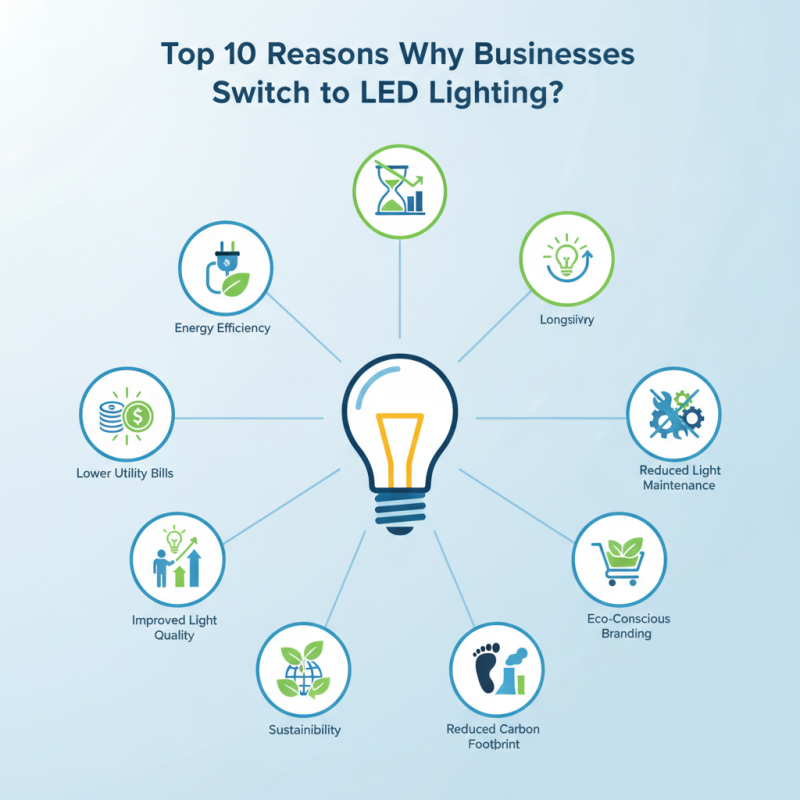
Top 10 Reasons Why Businesses Switch to LED Lighting
| Reason |
Description |
Impact on Productivity |
| Improved Light Quality |
LED lighting provides consistent and directed light, reducing glare and enhancing visibility. |
Increased focus and reduced eye strain among employees. |
| Energy Efficiency |
LEDs use significantly less energy compared to traditional bulbs, leading to lower electricity bills. |
Savings can be redirected to other business areas, enhancing overall productivity. |
| Longer Lifespan |
LEDs last up to 25 times longer than traditional bulbs, reducing replacement frequency. |
Less downtime for maintenance, allowing employees to focus on tasks. |
| Environmentally Friendly |
LEDs contain no hazardous materials and are 100% recyclable. |
Positive corporate responsibility boosting employee morale. |
| Better Color Rendering |
LEDs offer superior color rendering capabilities, making spaces appear more vibrant. |
Enhances product displays and employee creativity in workspace. |
| Instant Lighting |
LEDs illuminate instantly without warm-up time, providing immediate visibility. |
Minimizes delays in operations, especially in critical tasks. |
| Smart Technology Integration |
LED systems can be integrated with smart controls for efficiency. |
Enables optimized working conditions based on real-time usage. |
| Noise Reduction |
LED lights emit very little noise, providing a more peaceful workspace. |
Enhances concentration levels among employees. |
| Lower Heat Emission |
LEDs produce very little heat compared to incandescent bulbs. |
Reduces cooling costs and improves overall comfort in the workplace. |
| Variety of Designs |
LEDs come in various styles and designs suitable for different environments. |
Allows for creative and versatile workspace designs that can inspire innovation. |
FAQS
: LED lights use up to 75% less energy than traditional lighting solutions.
LED lights can last up to 25,000 hours or more, unlike traditional bulbs that last about 1,000 hours.
LEDs offer longer lifespan, reduced maintenance, and consistent performance without dimming or flickering.
Businesses can use digital meters or smart lighting systems to monitor energy consumption.
Some businesses hesitate due to initial costs or stick to older technologies out of habit.
Yes, many regions offer rebates that can help offset the initial costs of LED lighting.
Simple actions like turning off lights can yield immediate and noticeable energy savings.
It's essential to pay attention to light quality, as not all LEDs are created equal.
Taking a step-by-step approach can help ease the transition and make it less overwhelming.
Fewer replacements due to LEDs mean reduced labor costs and less waste management.
Conclusion
The article "Top 10 Reasons Why Businesses Switch to LED Lighting" delves into the numerous advantages of making the transition to LED lighting in commercial spaces. One key reason is the significant energy efficiency that LEDs offer, which reduces overall consumption and results in lower utility bills. Additionally, LED lights have a much longer lifespan compared to traditional bulbs, leading to less frequent replacements and maintenance costs.
Cost savings are further enhanced by the reduced carbon footprint associated with LED adoption, contributing positively to the environment. Furthermore, the improved light quality of LED fixtures can enhance workplace productivity, making them an attractive option for businesses aiming to create a better working environment. Overall, these factors illustrate why businesses switch to LED lighting, as they seek sustainable and economical solutions for their lighting needs.

 Velvet Light