For many businesses, lighting is a quiet operating cost—until bills rise or a failed fixture leaves a loading bay dim. That is why businesses switch to LED lighting: LEDs can use substantially less electricity and often need fewer replacements. The U.S. Department of Energy’s Energy Saver guidance says residential LEDs use at least 75% less energy and last up to 25 times longer than incandescent lighting. Those figures are a useful benchmark, not a guaranteed result for every commercial site.
The business case depends on more than the lamp. A warehouse with high ceilings may save labor by reducing lift visits for maintenance. An office may value more consistent light and better control through occupancy sensors or dimming. The U.S. Department of Energy’s FEMP guidance also evaluates lighting products through lifecycle cost, including purchase, energy, and maintenance expenses. That is a stronger comparison than fixture price alone.
Still, estimates can disappoint. Actual savings vary with operating hours, electricity rates, existing equipment, and installation quality. A retrofit plan should record current wattage, usage schedules, and maintenance needs before projecting payback. Check compatibility, light levels, and available utility incentives, too; programs and eligibility change. Small details matter. This overview looks at the leading reasons businesses make the switch, while recognizing that LEDs are not an automatic win in every space. A careful audit can reveal where the upgrade pays off—and where assumptions need another look.
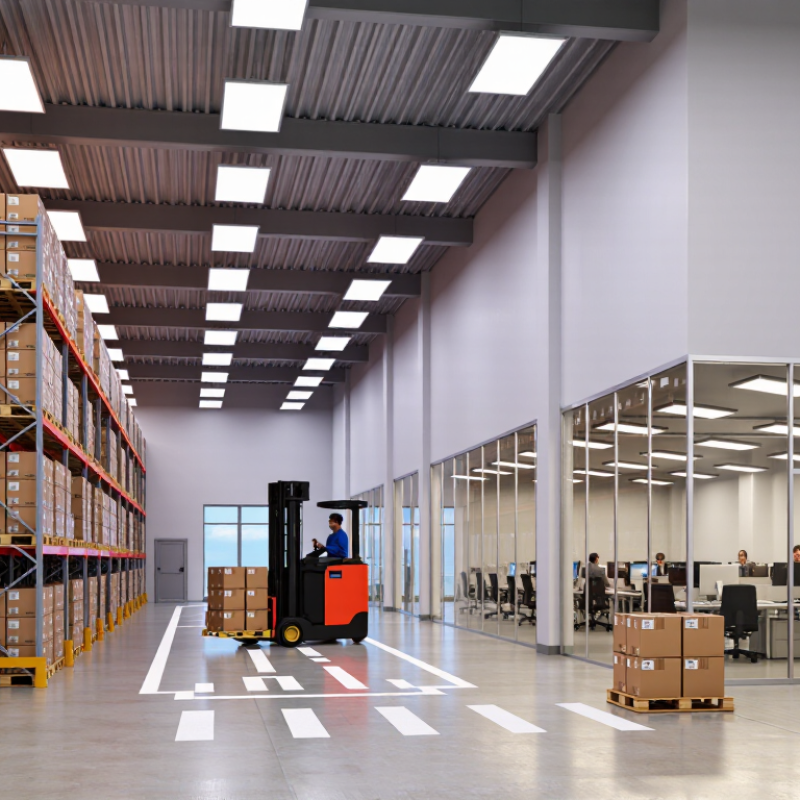
In a commercial building, LED lighting begins with electricity flowing through a driver. The driver converts incoming alternating current into a controlled supply for the LEDs. Inside each LED, a semiconductor emits light when current passes through it. A phosphor layer can convert some of that light into a broader white spectrum. Small lenses and reflectors then direct light onto desks, aisles, or work surfaces. The fixture’s design matters. A powerful lamp can still leave dark corners if its optics are poorly matched to the room.
LED fixtures also manage heat. Their heat sinks move warmth away from the diode and help maintain steady performance. Dimming controls and occupancy sensors can adjust output when daylight enters through windows or rooms sit empty. Still, controls need careful setup. A sensor placed behind a shelf may miss activity, while an incompatible dimmer can cause flicker. It is easy to focus only on wattage and overlook light distribution; that shortcut can lead to disappointing results.
Tips: Check fixture spacing and light levels at the work surface, not just the ceiling. Review driver and control compatibility before installation. Keep notes on glare and dimming after the first week; real rooms sometimes reveal details that plans miss.
Businesses replace traditional lighting with LEDs to reduce electricity use and maintenance, but the results depend on the building. An older fluorescent fitting may draw more power than a suitable LED replacement. Multiply that difference across a warehouse running long shifts, and monthly costs can change noticeably. Not overnight.
LEDs also last longer under appropriate operating conditions, which can mean fewer ladder visits and less disruption in high-ceiling areas. But advertised lifespan is not a guarantee. Heat, poor installation, and frequent switching can affect performance. A careful assessment should compare actual operating hours, fixture condition, and electricity rates before estimating savings.
Light quality matters, too. In a shop, accurate color rendering can help staff inspect products; in an office, glare from a poorly chosen panel can cause discomfort. Measure light levels at work surfaces, and check whether existing dimmers or controls will work with the new fittings. A small trial in one room can reveal problems that a product sheet misses. Some spaces may need different optics or color temperatures, so a one-size replacement plan is rarely ideal.
The initial purchase and installation can cost more than keeping old fixtures in service. Compare that cost with expected energy and maintenance savings over time, using realistic assumptions. Keep the calculations. If the payback depends on perfect conditions, the estimate needs another look.
Businesses often switch to LED lighting because lighting can run for many hours each day. LEDs typically use less electricity than older incandescent or fluorescent lamps while providing comparable light output. A 60-watt incandescent bulb, for example, may be replaced by an LED using roughly 8 to 10 watts. The exact comparison depends on brightness, fixture design, and product quality. Measure actual use.
Lower energy use can reduce monthly bills, especially in warehouses, offices, and shops with long operating hours. A practical estimate starts with the existing lamp wattage, the replacement wattage, the number of fixtures, and hours used. Then multiply the expected savings by the local electricity rate. A small spreadsheet works. But estimates can miss lights left on after closing or seasonal changes in operating hours.
LEDs can also lower maintenance costs because many have longer rated lifespans than traditional lamps. Fewer replacements may mean less staff time spent changing bulbs, particularly in high ceilings or hard-to-reach areas. Still, lifespan claims describe test conditions, not a promise for every fixture. Heat, dimmer compatibility, and frequent switching can affect performance. Check the fixture before buying, and compare the full installation cost with projected savings. The result may be less dramatic than a sales estimate suggests. That deserves a closer look.
LED lighting can reduce routine relamping, especially in high-ceiling warehouses where replacing a bulb requires equipment and scheduled labor. Many LED fixtures also last longer than older fluorescent or incandescent lamps, though actual service life depends on heat, operating hours, and component quality. Drivers can fail before the light source does. Keep that in mind.
A maintenance review should compare fixture life, warranty terms, and replacement-part availability with existing records. Dust still gathers on lenses, and dirty fixtures can make a workspace feel dim even when the LEDs function properly. A simple inspection schedule helps catch this. It need not be complicated.
Workplace conditions matter just as much as maintenance savings. Even, well-placed light can make labels easier to read and reduce dark patches over workbenches. But a bright retrofit may create glare on screens or polished surfaces. Color temperature and dimming settings also affect how a space feels during a full shift. Test a small area at different times of day before changing every fixture. That may seem slow. It can reveal issues that a product sheet cannot, including uneven light or an uncomfortable color tone. One overlooked detail is worker feedback: a technically efficient setup may still need adjustment if people find it tiring.
Top Reasons Why Businesses Switch to LED Lighting
What Businesses Evaluate Before an LED Upgrade
Before replacing fixtures, businesses should map how each space is used. A warehouse aisle needs clear visibility at floor level, while a meeting room benefits from comfortable, adjustable light. Check current brightness, color appearance, operating hours, and areas with uneven illumination. Photos and simple measurements help, but they do not replace a lighting assessment. Small details matter.
Compare the full project cost, not just the price of each fixture. Include installation, controls, maintenance access, and expected energy use. Ask whether existing wiring and dimmers are compatible, and confirm that proposed fixtures suit ceiling height and room conditions. Request a layout or sample installation where practical. A projected payback is only as reliable as its assumptions; actual hours and energy rates may differ. That part is easy to overlook.
Tips: Record operating hours for a typical week before estimating savings. Check light levels after installation, especially in work areas and on shelves. Keep a few existing fixtures in place during a trial if uncertainty remains. Perfect data is rare, and a neat spreadsheet can still miss glare, shadows, or staff preferences.
Longer rated life can mean fewer lamp replacements and less maintenance. Before upgrading, businesses should also assess upfront costs, fixture compatibility, light output, and operating schedules.
Typical rated-life estimates: incandescent 1,000 hours, CFL 8,000 hours, and LED 25,000 hours. Actual product life varies. Source: U.S. Department of Energy, LED Lighting.
A driver converts incoming electricity into a controlled supply. Semiconductor components then emit light. Small lenses direct it toward desks, aisles, or workbenches.
Fixture optics and spacing affect light distribution. Poorly matched lenses may leave corners dim, even with a bright lamp. Check the work surface.
It can, especially where older fixtures run for long shifts. Fewer relamping visits may also help in high-ceiling spaces. Savings vary.
No. Heat, operating hours, installation, and frequent switching can affect performance. Drivers may fail before the light source does. Worth remembering.
Compare operating hours, fixture condition, and electricity rates. Check driver and dimmer compatibility, too. A small trial room can expose problems.
Even light can make labels easier to read, but glare may bother people using screens. Test color tone and brightness during a full shift.
Yes. Dust can collect on lenses and make a room seem dim. A simple inspection schedule helps, though it need not be elaborate.
Compare installation costs with realistic energy and maintenance savings. Keep the calculations. If payback assumes perfect conditions, review the estimate again.
LED lighting produces illumination by passing an electrical current through semiconductor components, converting energy into light with less heat than many traditional lighting systems. In commercial buildings, fixtures can be selected to suit offices, warehouses, retail spaces, and other work areas. Understanding how this technology works helps explain why businesses switch to led lighting: LEDs can use less electricity, offer consistent illumination, and provide flexible options for different tasks.
Replacing older lighting may also lower energy bills and reduce how often lamps and components need attention, helping limit maintenance time and disruption. Better-controlled, suitable lighting can support comfortable and productive workplace conditions. Before an upgrade, businesses should consider existing fixtures and wiring, light levels, color temperature, controls, installation costs, and expected energy and maintenance savings. Comparing these factors helps organizations choose an approach that fits their building, budget, and operational needs.

Velvet Light